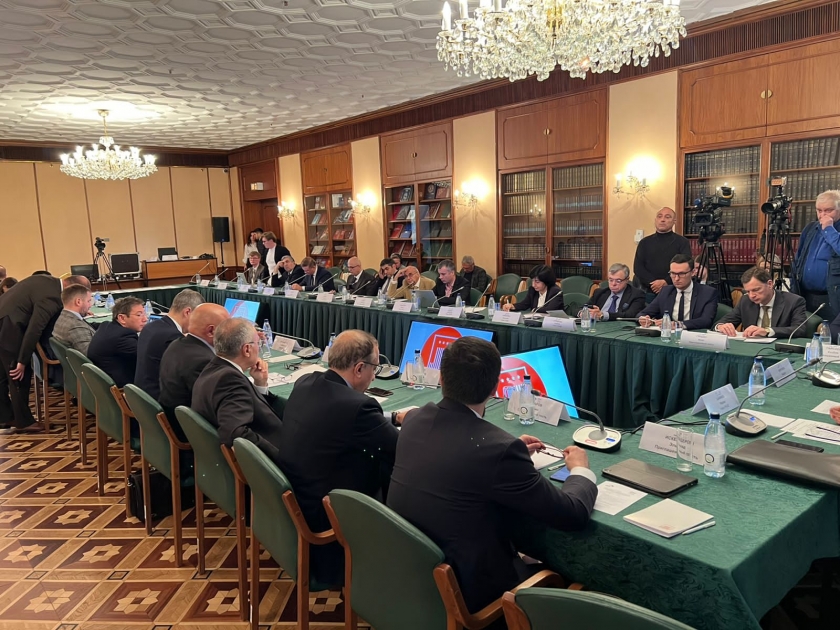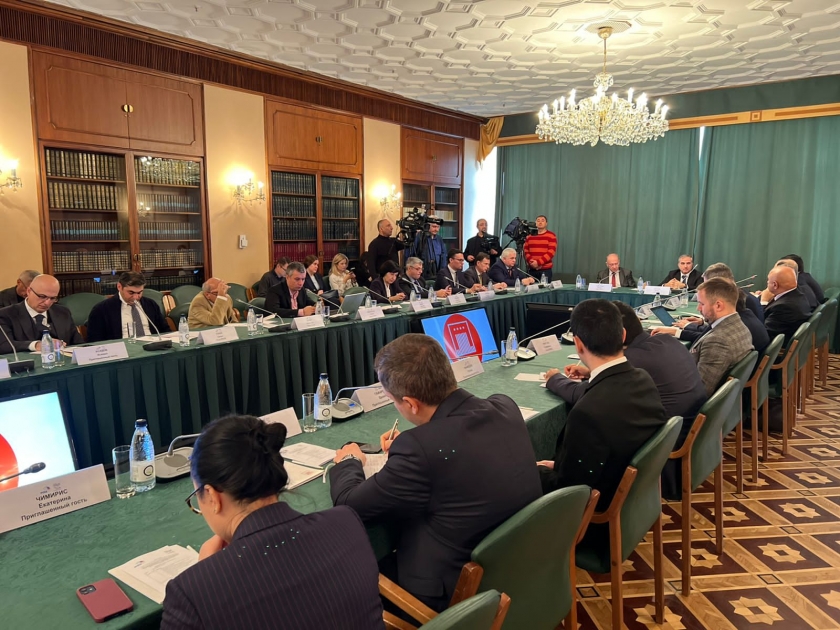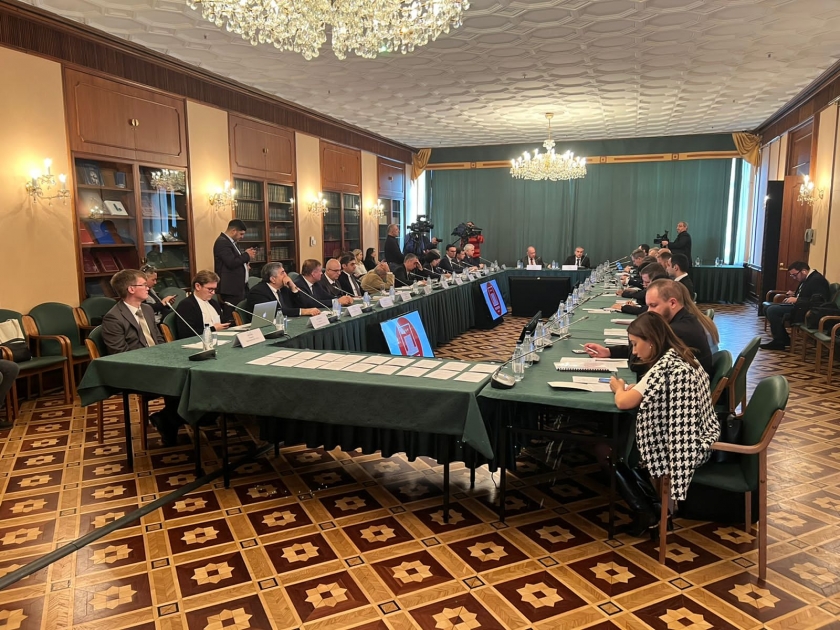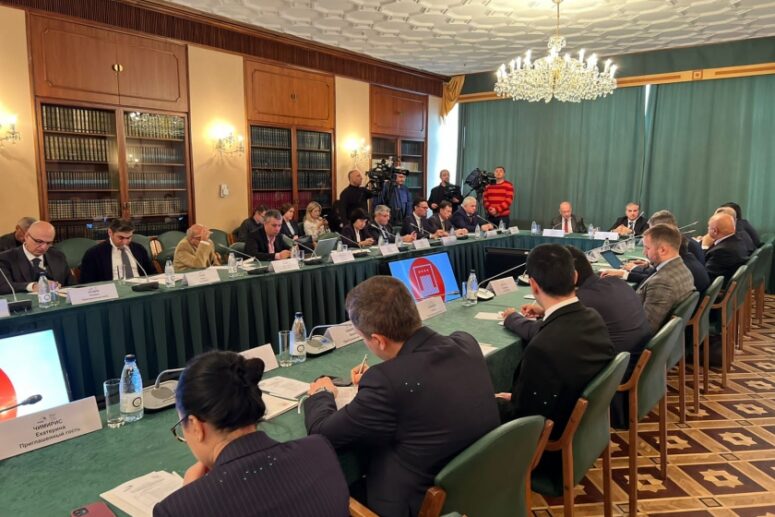
The second meeting of the Russia–Azerbaijan Expert Council (RAEC), dedicated to the theme “30 Years of Diplomatic Relations between the Russian Federation and the Republic of Azerbaijan: The Path Traveled and Prospects for the Development of Bilateral Relations in the Context of Regional and Global Cooperation,” was held in Moscow.
The event was organized by the Russian International Affairs Council (RIAC) and the Center of Analysis of International Relations (AIR Center) of Azerbaijan.
According to AZERTAC, the meeting was opened by RIAC Director General Andrey Kortunov and Chairman of the AIR Center Farid Shafiyev. Opening remarks were delivered by Deputy Chair of the State Duma Committee on CIS Affairs, Eurasian Integration and Relations with Compatriots Kazbek Taysayev, Ambassador-at-Large of the Ministry of Foreign Affairs of Azerbaijan Elshad Isgandarov, and Member of the Milli Majlis Nizami Safarov. The speakers emphasized that Russia–Azerbaijan relations rest on a solid foundation of mutual respect for national interests, shared historical roots, and a high level of trust between the leaders of the two countries—President of the Russian Federation Vladimir Putin and President of the Republic of Azerbaijan Ilham Aliyev.
In particular, Kazbek Taysayev noted that in Russia, high appreciation is given to President Ilham Aliyev’s contribution to the development of bilateral relations between Russia and Azerbaijan, the foundations of which were laid by Azerbaijan’s National Leader Heydar Aliyev. He added that the 100th anniversary of Heydar Aliyev’s birth will be widely commemorated in the Russian Federation next year, providing an opportunity to once again reflect on the role of this outstanding statesman in the shared history of the two nations.
Ambassador-at-Large of the Ministry of Foreign Affairs of Azerbaijan Elshad Isgandarov stated that over the 30 years during which Russia and Azerbaijan have interacted as independent states, their sustained strategic partnership can serve as a model of relations between sovereign actors in a multipolar world.
During discussions held in an informal setting and interactive dialogue format, speakers examined the approaches of Russia and Azerbaijan to shaping the security architecture in the South Caucasus under the new realities. In this context, it was reiterated that the positions of Russia and Azerbaijan coincide with regard to the need to advance the post-conflict agenda and to facilitate the early conclusion of a peace treaty based on the principles of mutual recognition of territorial integrity and respect for sovereignty, as reflected in statements prepared following the Prague and Sochi talks between Azerbaijan and Armenia.
It was noted that delaying this process creates negative conditions both for the emergence of additional sources of tension in the region and for the disruptive activities of external actors.
Members of the Russia–Azerbaijan Expert Council agreed on the necessity of strengthening cooperation between the parties in the sphere of regional economic development, fostering trust and sustainable peace in the South Caucasus, and enhancing bilateral cooperation in regulating global and regional transport and logistics communications. Particular emphasis was placed on ensuring the opening and unimpeded functioning of regional communications, especially amid turbulence in the international transport and logistics system, and on implementing the provisions of the trilateral statements related to the growing role of the North–South and East–West transport corridors in cooperation between the Russian Federation and the Republic of Azerbaijan.
Participants expressed their readiness to enhance the level of Russia–Azerbaijan mutual understanding, including through the regular convening of Council meetings. In this regard, the participants adopted an official document containing practical recommendations by the RAEC on various aspects of the strategic partnership between the two countries.
The event was organized by the Russian International Affairs Council (RIAC) and the Center of Analysis of International Relations (AIR Center) of Azerbaijan.
According to AZERTAC, the meeting was opened by RIAC Director General Andrey Kortunov and Chairman of the AIR Center Farid Shafiyev. Opening remarks were delivered by Deputy Chair of the State Duma Committee on CIS Affairs, Eurasian Integration and Relations with Compatriots Kazbek Taysayev, Ambassador-at-Large of the Ministry of Foreign Affairs of Azerbaijan Elshad Isgandarov, and Member of the Milli Majlis Nizami Safarov. The speakers emphasized that Russia–Azerbaijan relations rest on a solid foundation of mutual respect for national interests, shared historical roots, and a high level of trust between the leaders of the two countries—President of the Russian Federation Vladimir Putin and President of the Republic of Azerbaijan Ilham Aliyev.
In particular, Kazbek Taysayev noted that in Russia, high appreciation is given to President Ilham Aliyev’s contribution to the development of bilateral relations between Russia and Azerbaijan, the foundations of which were laid by Azerbaijan’s National Leader Heydar Aliyev. He added that the 100th anniversary of Heydar Aliyev’s birth will be widely commemorated in the Russian Federation next year, providing an opportunity to once again reflect on the role of this outstanding statesman in the shared history of the two nations.
Ambassador-at-Large of the Ministry of Foreign Affairs of Azerbaijan Elshad Isgandarov stated that over the 30 years during which Russia and Azerbaijan have interacted as independent states, their sustained strategic partnership can serve as a model of relations between sovereign actors in a multipolar world.
During discussions held in an informal setting and interactive dialogue format, speakers examined the approaches of Russia and Azerbaijan to shaping the security architecture in the South Caucasus under the new realities. In this context, it was reiterated that the positions of Russia and Azerbaijan coincide with regard to the need to advance the post-conflict agenda and to facilitate the early conclusion of a peace treaty based on the principles of mutual recognition of territorial integrity and respect for sovereignty, as reflected in statements prepared following the Prague and Sochi talks between Azerbaijan and Armenia.
It was noted that delaying this process creates negative conditions both for the emergence of additional sources of tension in the region and for the disruptive activities of external actors.
Members of the Russia–Azerbaijan Expert Council agreed on the necessity of strengthening cooperation between the parties in the sphere of regional economic development, fostering trust and sustainable peace in the South Caucasus, and enhancing bilateral cooperation in regulating global and regional transport and logistics communications. Particular emphasis was placed on ensuring the opening and unimpeded functioning of regional communications, especially amid turbulence in the international transport and logistics system, and on implementing the provisions of the trilateral statements related to the growing role of the North–South and East–West transport corridors in cooperation between the Russian Federation and the Republic of Azerbaijan.
Participants expressed their readiness to enhance the level of Russia–Azerbaijan mutual understanding, including through the regular convening of Council meetings. In this regard, the participants adopted an official document containing practical recommendations by the RAEC on various aspects of the strategic partnership between the two countries.