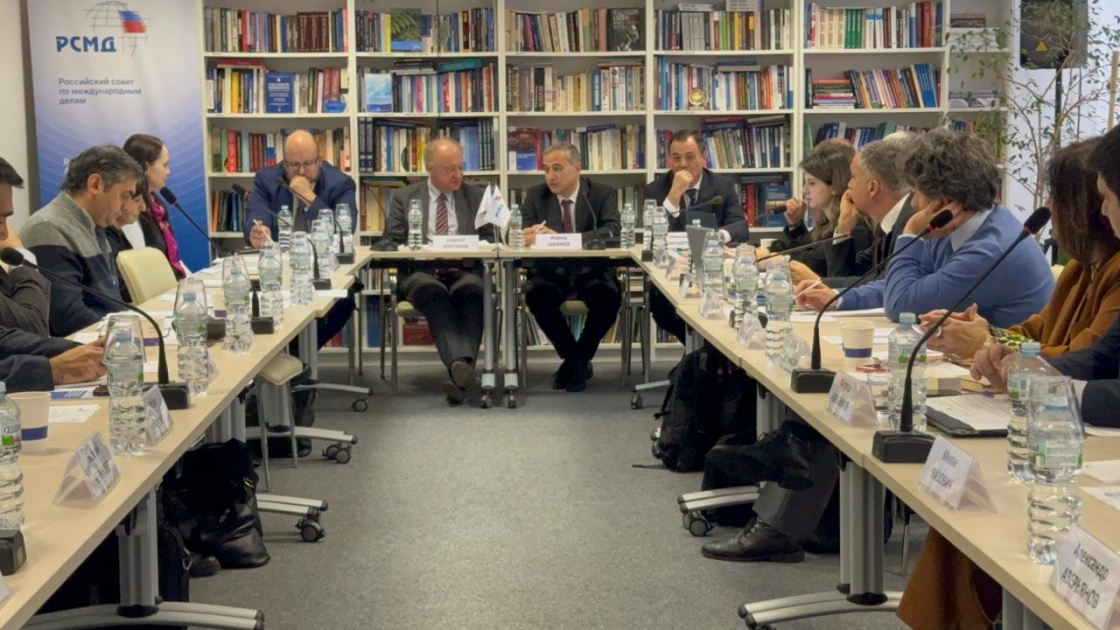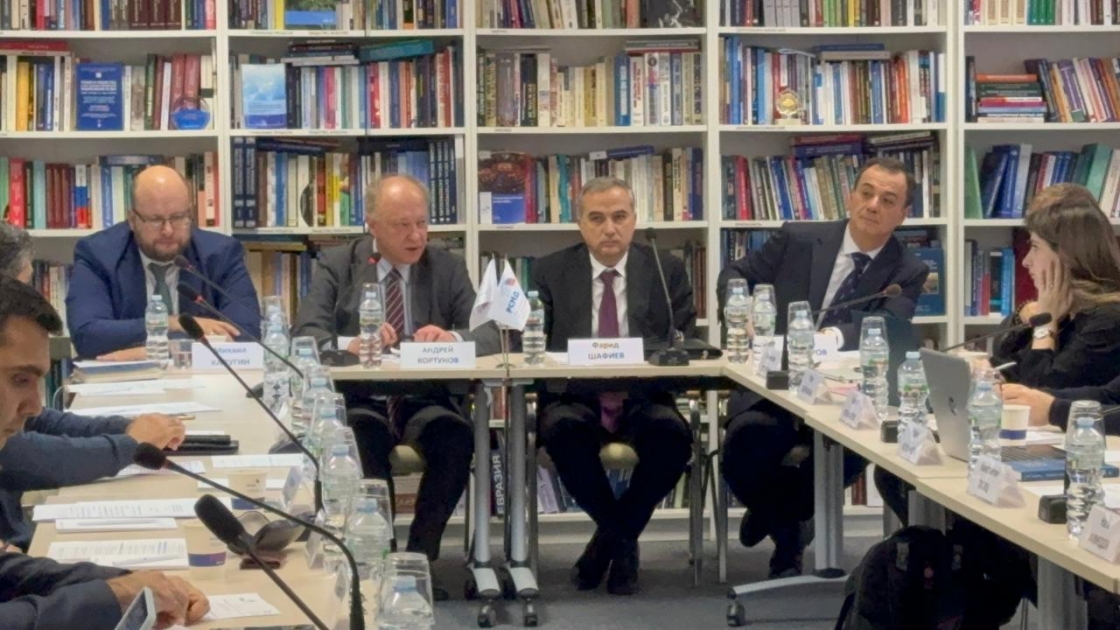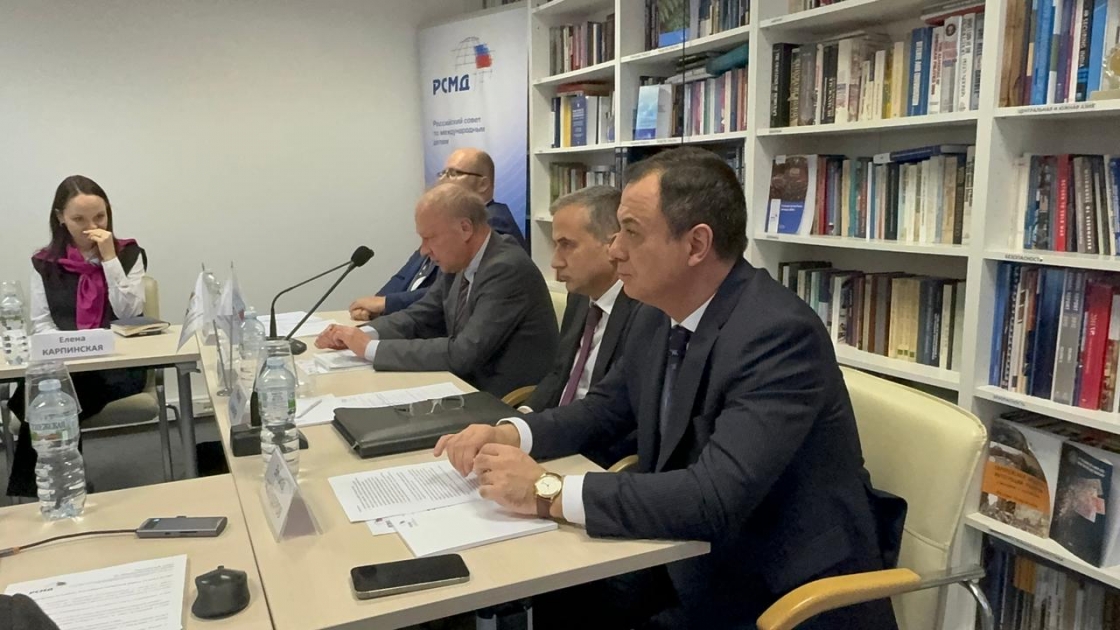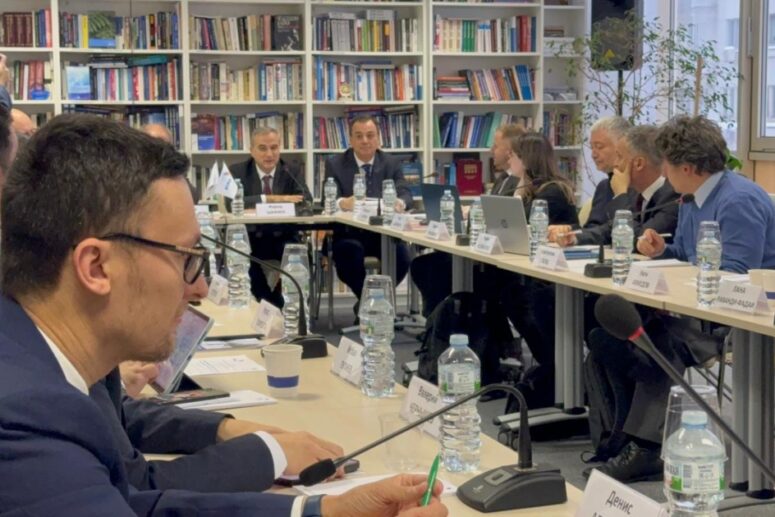
The fourth meeting of the Russia–Azerbaijan Expert Council was held in Moscow.
According to AZERTAC, the event, titled “Russia–Azerbaijan Interaction in the Context of Post-Conflict Development in the South Caucasus,” was jointly organized by the Russian International Affairs Council and the Center of Analysis of International Relations of Azerbaijan.
In their opening remarks, Ambassador-at-Large of the Ministry of Foreign Affairs of the Republic of Azerbaijan Elshad Iskandarov and Deputy Director of the CIS Countries Department of the Ministry of Foreign Affairs of the Russian Federation Mikhail Kalugin emphasized the strategic partnership character of Russia–Azerbaijan relations. They noted the closeness of Moscow’s and Baku’s positions in the post-conflict period in the South Caucasus, particularly with regard to countering the increasing destructive interference by non-regional states in recent times. The foreign ministry officials highly assessed the contribution of the Council’s activities to strengthening bilateral relations and shared their views on its future work.
Subsequently, Director General of the Russian International Affairs Council Ivan Timofeev and Chairman of the Board of the Center of Analysis of International Relations Farid Shafiyev highlighted the high level of expert engagement demonstrated by the Council in the short period since its establishment. They stressed the importance of direct contacts between experts of the two countries, as well as informing their respective publics about ongoing processes in the region.
During the closed sessions of the meeting, held in an interactive dialogue format, discussions focused on regional security challenges, cooperation amid global challenges, and strengthening regional cooperation within the 3+3 format in order to prevent new geopolitical risks, particularly in the South Caucasus. Regional connectivity issues, including the North–South Transport Corridor, the East–West route, and the Zangezur Corridor, were also at the center of attention.
The meeting also resulted in the adoption of a communiqué reflecting the Council’s practical recommendations on various aspects of developing bilateral relations. In the document to be submitted to the upcoming 12th Russia–Azerbaijan Interregional Forum, the relevant state bodies of both countries also deemed it appropriate to organize the Council’s activities on a permanent basis.
According to AZERTAC, the event, titled “Russia–Azerbaijan Interaction in the Context of Post-Conflict Development in the South Caucasus,” was jointly organized by the Russian International Affairs Council and the Center of Analysis of International Relations of Azerbaijan.
In their opening remarks, Ambassador-at-Large of the Ministry of Foreign Affairs of the Republic of Azerbaijan Elshad Iskandarov and Deputy Director of the CIS Countries Department of the Ministry of Foreign Affairs of the Russian Federation Mikhail Kalugin emphasized the strategic partnership character of Russia–Azerbaijan relations. They noted the closeness of Moscow’s and Baku’s positions in the post-conflict period in the South Caucasus, particularly with regard to countering the increasing destructive interference by non-regional states in recent times. The foreign ministry officials highly assessed the contribution of the Council’s activities to strengthening bilateral relations and shared their views on its future work.
Subsequently, Director General of the Russian International Affairs Council Ivan Timofeev and Chairman of the Board of the Center of Analysis of International Relations Farid Shafiyev highlighted the high level of expert engagement demonstrated by the Council in the short period since its establishment. They stressed the importance of direct contacts between experts of the two countries, as well as informing their respective publics about ongoing processes in the region.
During the closed sessions of the meeting, held in an interactive dialogue format, discussions focused on regional security challenges, cooperation amid global challenges, and strengthening regional cooperation within the 3+3 format in order to prevent new geopolitical risks, particularly in the South Caucasus. Regional connectivity issues, including the North–South Transport Corridor, the East–West route, and the Zangezur Corridor, were also at the center of attention.
The meeting also resulted in the adoption of a communiqué reflecting the Council’s practical recommendations on various aspects of developing bilateral relations. In the document to be submitted to the upcoming 12th Russia–Azerbaijan Interregional Forum, the relevant state bodies of both countries also deemed it appropriate to organize the Council’s activities on a permanent basis.